UHURU

Where we are putting our weight

Systems & infrastructure

Our core has always been ICT. Over the last two years it has become something sharper: building the operational systems a company actually runs on, running serious open-source infrastructure as one estate across five countries, and putting AI to real work under strict human control. We practise self-custody of systems and data, and we prove it on ourselves first.

Have a system to build, or an estate to run?

Talk to us →

We build bespoke systems

AI collapsed the cost of building software. We industrialised the cost of maintaining it. Together that lets us grow the system a company actually needs, inside the operation itself, at a cost structure the traditional ERP industry cannot follow.

A factory's operating platform, grown from the inside

Our flagship build runs a Tanzanian manufacturer with a trucking fleet, fifteen sales branches, a refinery and a weighbridge. It runs the fleet end to end, captures branch sales in real time, ingests the weighbridge, the fuel regulator's published prices and traffic-police fines automatically, and answers plain-language questions through a role-scoped AI assistant. One founder directing a governed workforce of AI agents. Twelve months. In production, in daily use.

  • A revenue-recording error of roughly TZS 879 million found and corrected, caught by reconciling three independent witnesses of the same trips.
  • Freight discovered costed at one thousandth of its true weight, caught against the weighbridge.
  • Gross margin now agrees within one point across three independently produced reports.
  • 2,392 commits, 80 releases, 386 automation workflows, 16 integrated systems, in under a year.

We do not claim the platform saved money. We claim something more durable: costs that could not be measured before are measured now, and the control gaps that money leaked through are closed. Measurement is what makes saving possible.

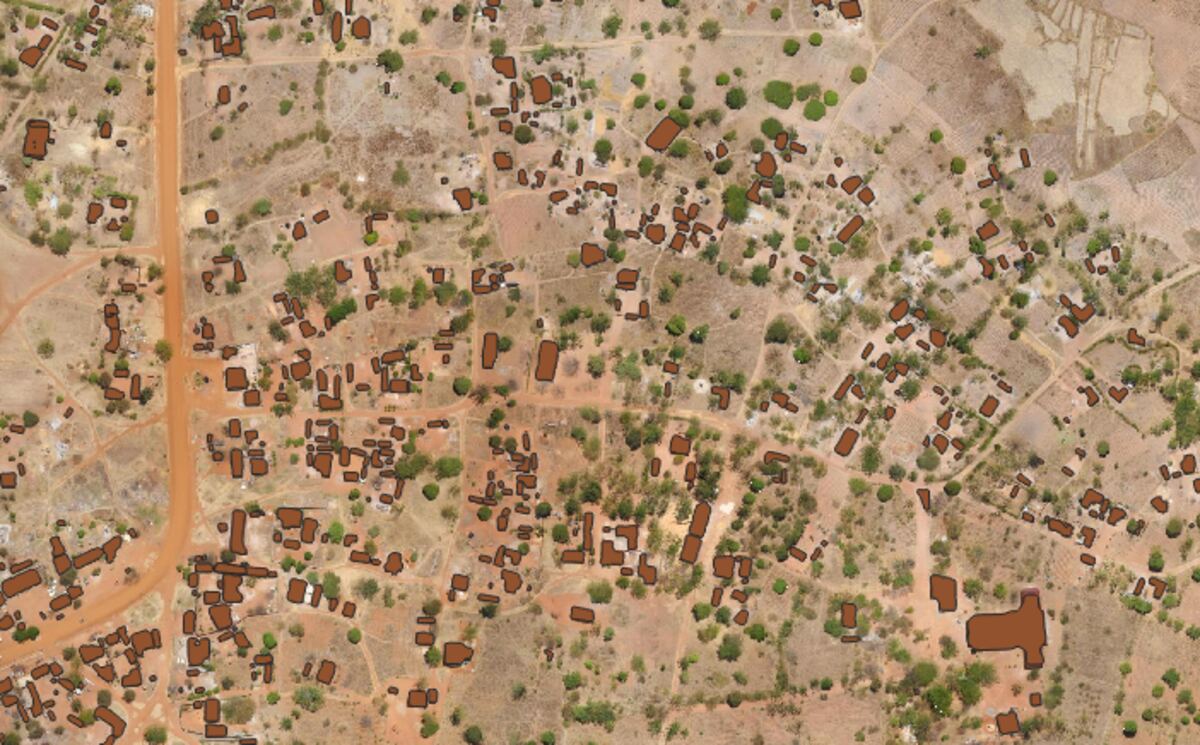
AI-detected building footprints over imagery
The same habit, applied to geospatial data: machine-extracted building footprints. We make data answer questions.

We run infrastructure

Bespoke services around a stack we know deeply. Not projects that end at handover; estates, run for years, with the operational discipline written down. Our ICT practice is the oldest thing we do: over the years we and our team have delivered for organisations including the World Bank, USAID, OneWorld International, Map of Medicine, Twaweza, HIVOS, Friends of the Earth and Tanzania's Commission for Science and Technology.

Firewalls & secure networking

Eleven enterprise firewalls across five countries, meshed together privately, configuration backed up and checksummed on a schedule. Rule changes made against the firewall itself, previewed before they apply, with safeguards. Encrypted overlays that reach every site through carrier-grade NAT with nothing exposed to the public internet.

The network source of truth

Address management and data-centre inventory for multi-site estates: every device, rack and site under one system of record, with live topology views and floorplans. Our own tooling lets an AI assistant query the network while making changes to it structurally impossible.

Monitoring & observability

We monitor what matters, not what is easy. A CCTV estate that monitoring could only see as boxes became 188 individually watched cameras across eleven recorders. Metrics, logs, uptime and alerting as one stack, on separate hardware from the thing most likely to fail.

Mail & messaging

A licensed, self-managed mail platform: eight domains, around 139 mailboxes, migrated off a blacklisted shared host and still in production years later, with safe provisioning tooling and a read-only health-and-upgrade gate around it.

Shared workspace & storage

A multinational group's entire shared workspace, roughly 12,000 files across ten sites, organised by site and by function, with tasks, chat, forms and wiki on one self-hosted platform. Including the unglamorous part: making sure company data lives on company-controlled storage.

Virtualisation & backup

Multi-node virtualisation clusters across sites, enterprise backup on dedicated hardware, and one rule we do not bend: a backup you have not restored is not a backup, and a service is not backed up until a missed run raises an alert.

"A backup you have not restored is not a backup."

"A service is not live until it is monitored."

"No agent may delete data without asking a human first."

Three house rules. Every component we build or take over leaves with a written handover: what it is, why it was decided that way, what is still open. The deliverable is a system someone else can run, not a dependency on us.

Real AI, on our own terms

Everyone is debating whether AI can replace enterprise software. We are already shipping it, carefully, and we host as much of it as we can ourselves, in a part of the world where that is supposed to be impossible.

Governed agents, not loose cannons

Our agents do real operational work and are architecturally prevented from doing damage: read-only by default, write credentials stripped from the agent's environment, no delete verb in any tool an agent can reach, and a human holding every gate. In production today: an assistant that reads a support ticket, pulls the linked business data, and writes the complete work order while a person still runs the change.

Self-custody of systems and data

Our mantra. We run our own secrets vault, our own monitoring, our own collaboration platform, and increasingly our own AI. Client data stays on client-controlled storage. Where a hosted model is the right tool we use it, but the architecture is built so the brain can be swapped for a local one without losing a thing.

Built for the drought

We run and evaluate local models in resource-strapped conditions and in the middle of a global storage and memory squeeze, and we publish the hard numbers: where an 8 GB GPU falls off a cliff, why the binding constraint is memory not just VRAM, why the biggest quantisation is usually wrong. Knowing exactly what your hardware will and will not do is the difference between AI that ships and AI that stalls.

Tool-agnostic, without compromise

We are open-source first, and have been since before it was fashionable. Our founder co-founded a software foundation in the UK around 2000 and built civic technology for community radio during the Yugoslav revolution. Most of what we deploy is open, mature and battle-tested, and we publish our own tooling back to the community where we can.

But the commitment is to the output, not to any one product. We are deliberately tool-agnostic: we pick the best tool for the job and are happy to license a proprietary one where it genuinely wins, from mail platforms to aircraft to frontier AI models. Open where open is better, paid where paid is better, and measured either way. How we assemble it all is, frankly, part of what you are hiring.

Have a system to build, or an estate to run?

Whether it is a platform that does not exist yet, or infrastructure that needs running properly, this is what we do.

support@uhurunet.com

Uhurunet Technology (T) Limited · Uhurulabs
Acacia Estates Offices, 1st Floor, Plot 84 Kinondoni Road
PO Box 38568, Dar es Salaam, Tanzania